
You Are the Environment

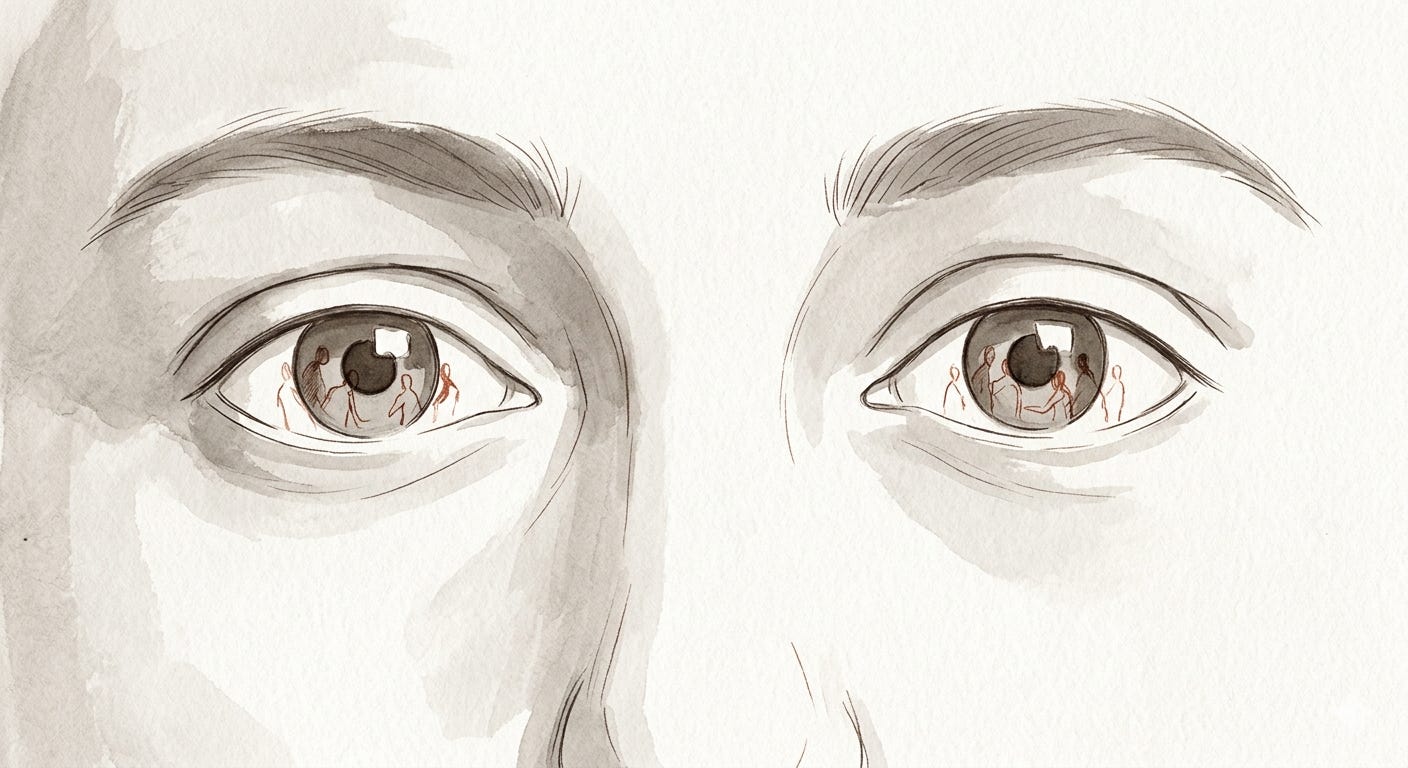
When I was young, I was often told to avoid bad company. To be careful about who I spent time with. To watch out for bad influences.
I don’t remember anyone ever telling me not to be one.
It felt quite normal growing up. Isn’t the bad company always someone else?
Yet, the older I got, the more awkward that asymmetry felt. Then, I came across an old equation on behaviors.
In 1936, psychologist Kurt Lewin proposed that human behavior is a function of the interaction between a person and their environment: B=f(P,E). Everything that surrounds a person is environment. The air in the room. The culture of an organization. The mood of someone sitting across the table.
Including other people. Including me. Including you.
The first time I encountered this equation, though, I didn’t see it that way. Not because it was complicated — it isn’t. But because I approached it as the P navigating my own life and trying to understand the environment that surrounded me. It had never really occurred to me that I was part of that E for someone else until way later. I don’t even know how it happened. One day, it felt immediately obvious, and from that moment, I couldn’t unsee it.
In that equation, we are all the P as much as a part of the E.
Lewin’s equation is a useful tool for self-management. It invites us to ask: how do I change my environment to be more focused, more energized, more productive? It is generally used as an invitation to curate our circles carefully. To choose the five people we spend the most time with. The advice is always directional — inward. What is the world doing to me, and how do I manage it?
That’s not wrong. But it is incomplete.
Because while you are busy curating your environment, you are someone else’s.
There’s a concept in psychology called the Fundamental Attribution Error. When we do something — snap at someone, withdraw, shut down — we experience it from the inside. We know the context. We know we didn’t sleep well, that the meeting went badly, that we’re carrying something heavy. So we extend ourselves grace. Circumstances explain behavior.
But the person sitting across from us doesn’t have access to our interior. They only have what they can see. And what they see — our bad mood, our distraction, our closed posture — is not their context for understanding us. It is their context, full stop. Their environment. The climate they are living in, right now, because of us.
We are not just reacting to the world. We are the weather someone else has to face.
I think about the relationships in my life; the ones that worked and, more painfully, the ones that didn’t. Looking back, I can see how many times I forgot I was the environment. How many times I was so absorbed in my own experience of a situation that I never stopped to ask what experience I was creating for someone else. I didn’t do it out of malice. I did it out of unawareness.
That’s what makes this hard. We perceive reality from inside our own subjectivity. We are, structurally, naturally, the P. Life is a subjective experience, and there’s no way out of that. Yet that doesn’t mean we can ignore that we are the environment for others. The effort to see yourself from the outside is real.
But that effort is not optional. Because, whether or not you make it, you are already there. Already part of the equation. Already shaping what is possible for the people around you; what they dare to say, what they feel free to try, whether they feel seen or invisible, supported or alone.
We spend a lot of energy thinking about who we surround ourselves with. It’s worth asking the other question too.
Not who are your five people to choose, but who are you for the people who have already chosen you?
Thanks for reading this far. Muchness is where I explore questions and topics that won’t leave me alone. If that sounds like your kind of thing, subscribe. And if this piece resonates with you, support this journey with a like or by sharing it with those who, like us, are trying to make sense of their reality.